

What is Manganese?
Manganese metal is a chemical element with the symbol Mn and atomic number 25. It is a silvery-grey metal that is commonly found in minerals and is essential for various industrial applications. It is a hard, but very brittle metal, and it is also very hard to melt. When pure, it can be very reactive and as a powder it can burn in oxygen. It is very easily oxidized and like iron it reacts to water and rusts. It is also very hard to melt.2
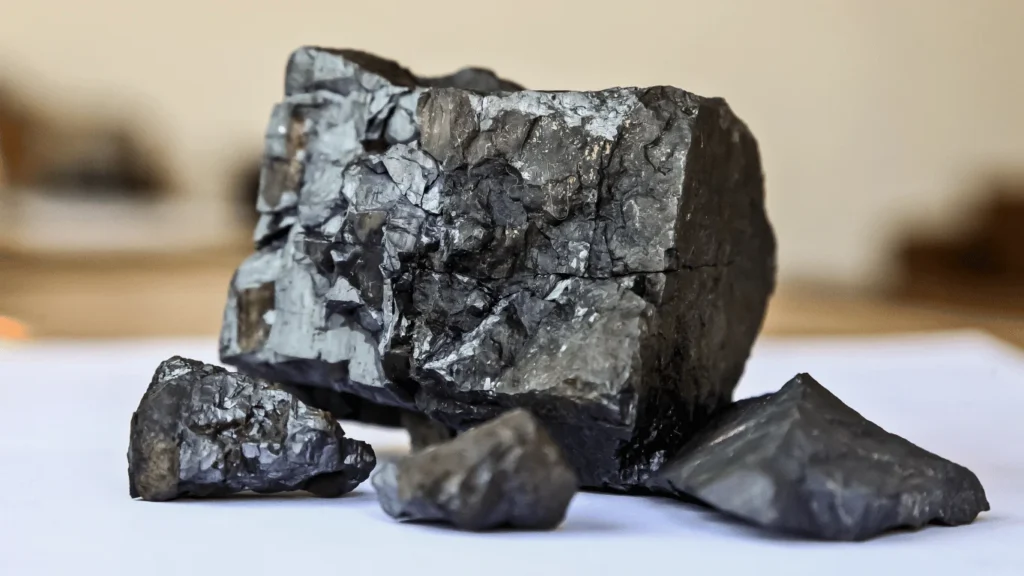
The metal plays a critical role in various industries. Its unique characteristics and versatility make it an indispensable element in numerous industrial applications.
We can find it in our stainless steel watches and in batteries powering our devices, but also in the human body. The average human body contains about 12 milligrams of manganese. We take in about 4 milligrams each day from such foods as nuts, bran, wholegrain cereals, tea and parsley. Without it, bones grow spongier and break more easily. It is also essential for utilisation of vitamin B1. 1
What Are Its Uses?
Manganese is very important when it comes to iron and stainless steel production, accounting for over 90% of the manganese mined today. It is a key component for stainless steel formulations and often used with aluminium alloys.
It is crucial in steel-making because it enhances properties that steel alone lacks. It prevents “hot shortness,” a surface cracking at high temperatures, and combines with sulphur, an unwanted element in steel. It also has a strong deoxidation ability, helps prevent corrosion, increases resistance to abrasion, lowers the transformation temperature from austenite to ferrite, and boosts the hardenability rate.
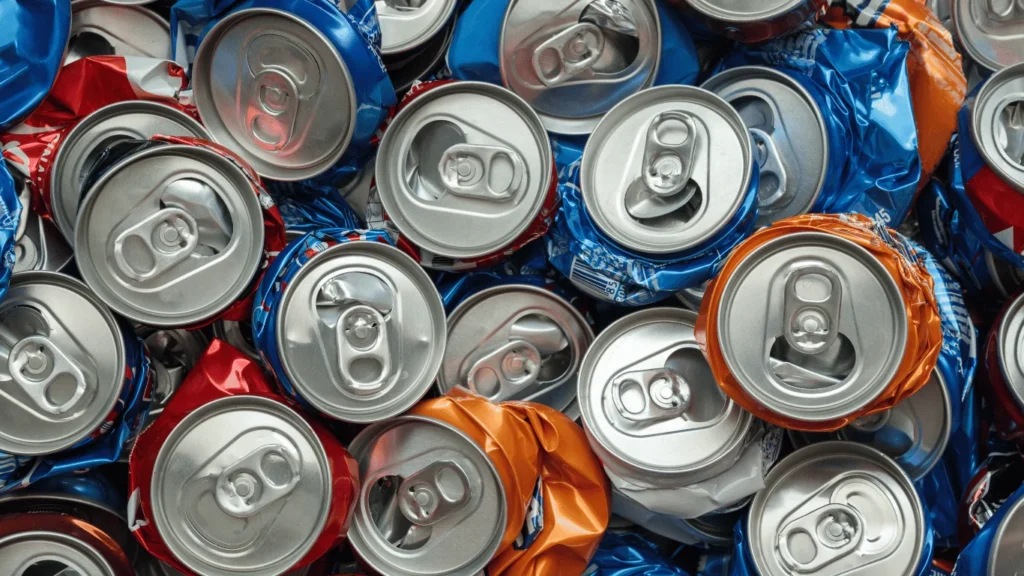
The aluminium production process is the second-largest consumer of manganese. Small amounts of manganese in aluminium improve its corrosion resistance. Aluminium-manganese and aluminium-manganese-magnesium alloys are used in kitchenware, roofing, car radiators, transportation, and especially beverage cans.
In copper alloy production, it improves mechanical strength, deoxidation, and castability. However, with copper alloys accounting for only two million tons per year, this market for manganese is relatively limited.
It is a versatile element used in various alloy fabrications. It is found in zinc and magnesium alloys, as well as in gold, silver, and bismuth production. However, the quantities used in some of these applications are very small.3
Manganese pigments are also used in the glass industry to give glass a violet colour. The use of these pigments can be traced back to the Stone Age, when the pigments were used in cave paintings2 during the upper palaeolithic period, 17.000 years ago.
Manganese For the Battery Sector
Manganese is not the first metal that comes to mind when thinking of electric vehicle (EV) batteries. Cobalt and lithium are among the metals commonly associated with EV battery packs. However, the raw material is in high demand among car manufacturers and plays an important role in battery-powered products.
Some go as far as describing it as the ‘mineral of the decade’ as it can be sourced more ethically compared to other metals. It is also cheaper to acquire than materials like cobalt.4
According to BloombergNEF, demand for manganese from the battery sector is expected to increase ninefold by 2030. Manufacturers are taking an interest in manganese because it is more affordable and could help lower battery costs. Both Tesla and Volkswagen have hinted that it could play a more significant role in future battery cells.5

It acts as a stabiliser in NMC (nickel manganese cobalt) cathode materials, which are crucial for the performance of Li-ion batteries. The composition of these materials affects battery life, driving range of electric cars, recharge speed, and energy storage capacity. It enhances the safety of battery cells, a top priority for batteries used in electric cars and devices.4
Where is Manganese Found?
Manganese mines can be found all over the world, in more than 30 countries, providing jobs for millions of workers, generating billions of dollars in taxes for local countries, and infrastructures for local communities. Both open-pit and underground methods are used to mine Manganese ore, with open-pit methods dominating. Manganese ore is then smelted to make Manganese alloy, with China being by far the biggest producer.3
The total global production volume in 2021 was 49.5 million metric tons. South Africa is the world’s largest producer by far, with production amounting to 19.16 million metric tons that year. Gabon was the second largest producer that year, at seven million metric tons.5

Manganese nodules have been found on the floor of the oceans. These nodules contain about 24% manganese, along with smaller amounts of many other elements.1
Manganese Mining with Electric Metals CEO Brian Savage
We spoke to Electric Metals CEO Brian Savage on Dig Deep The Mining Podcast, who are a US-based exploration and mineral development company developing the high-grade Emily manganese mine in Minnesota with the intention of producing high-value high purity manganese products for electrification and decarbonization energy transition strategies, particularly the electric vehicle and energy storage sector.

We asked Brian, what is the significance in today’s global market, what are it’s uses and why should we be developing manganese mines. This was his response:
“Manganese is the fourth most used metal by tonnage behind iron, copper, and aluminium. And so when you look at the development of the economy, anything that needs to be built generally has steel in it. And in order to make steel you need manganese. So I’ll say 90 % of manganese actually goes into the steel business. And that’s in the form of a manganese ore or ferromanganese, silica manganese, or electrolytic manganese metal, for example, can also go into that.
Not all manganese ores are created equal. From a manganese ore perspective, there’s a high grade, a mid grade, and a low grade manganese ore that further gets divided into lump, what they call lumpy and fines. Fines is a minus six millimetre product. The steel plants don’t particularly like fines that much because it tends to float and that can create explosions so they don’t particularly like that. As a result, most manganese mines and even ferromanganese plants and steel plants have a briquetting plant so they’ll turn those fines into a charcoal briquette size material. And then they put that into the furnace.
That’s kind of the manganese ore market. And then from there, all those high-grade manganese products, there’s high purity electrolytic manganese dioxide. So you use a manganese ore, you put it through electrolysis, and it comes out the other end. And that’s the stuff that goes into what I call flashlight batteries. There’s high purity electrolytic manganese metal, and that’s exactly what it’s talking about. They’re creating electrolytic metal and that metal can go into the steel sector. It can also go into the battery sector and it just gets dissolved in sulfuric acid and you’ve got your HP MSM.
From a supply chain perspective, China controls probably 95 plus percent of the metal market. There’s only two metal producers outside of China that I’m aware of. And so therefore the Chinese really control what pricing is going to be from that perspective.
And then you start getting into agricultural purposes of manganese. So regular, there’s agricultural grade manganese sulphate monohydrate, which is used in a fertilizer. And then if you’ve ever walked by your town’s wastewater treatment plant. Sometimes it smells, sometimes it doesn’t smell so bad, and that’s because they’re using permanganate, which is another use of manganate and manganese. And that’s what’s used to clean the water as well as reduce the smell. So it’s got a number of uses.
And while we’re going to be focused on producing manganese products for the electric vehicle battery sector, we’re not going to ignore the fact that it’s pretty ubiquitous and a number of different markets to be getting into. Especially, maybe probably advancing on your question is how about the United States? So 100 % of the manganese gets imported into the United States no matter what it’s used for. And so therefore having a domestic supply is going to be absolutely critical for supply chain de-risking.”
Listen to the episode here: https://bit.ly/3WIlKEI
Conclusion
Manganese is a versatile and indispensable metal that plays a critical role in various industries, particularly in steel production and battery technology. Its unique properties enhance the quality and durability of steel, making it a key component in construction and manufacturing. Its role in the production of aluminium alloys and its applications in agriculture and water treatment further emphasise its importance. As the demand for electric vehicles and renewable energy storage grows, its significance in the battery sector is poised to increase dramatically. Ensuring a stable and sustainable supply of manganese is crucial for meeting future technological and industrial needs, highlighting the importance of ongoing exploration and development of manganese resources globally.
For further articles and insights, don’t forget to sign up to our quarterly newsletter, and keep up to date by connecting with us on LinkedIn. Alternatively, if you would like to discuss our bespoke executive search solutions to ensure you have the right leaders for success, contact our team for expert guidance and support with your recruitment needs.
Sources:
1:https://www.rsc.org/periodic-table/element/25/manganese
2:https://www.umicore.com/en/about/our-metals/manganese/
3:https://www.manganese.org/about-manganese
4:https://autovista24.autovistagroup.com/news/manganese-electric-vehicle-batteries/
5:https://www.statista.com/statistics/1244066/global-manganese-production-volume-by-country/