In the mining industry, boards of directors play a pivotal role in shaping the strategy, governance, and long-term success of companies, yet their work often remains opaque to those outside the boardroom. From junior exploration firms to small-mid tier operators, executives and investors alike may wonder what boards actually do, how they add value, and what makes one board more effective than another. Understanding this is critical, not only for those managing companies, but for senior professionals considering a transition onto a board themselves.
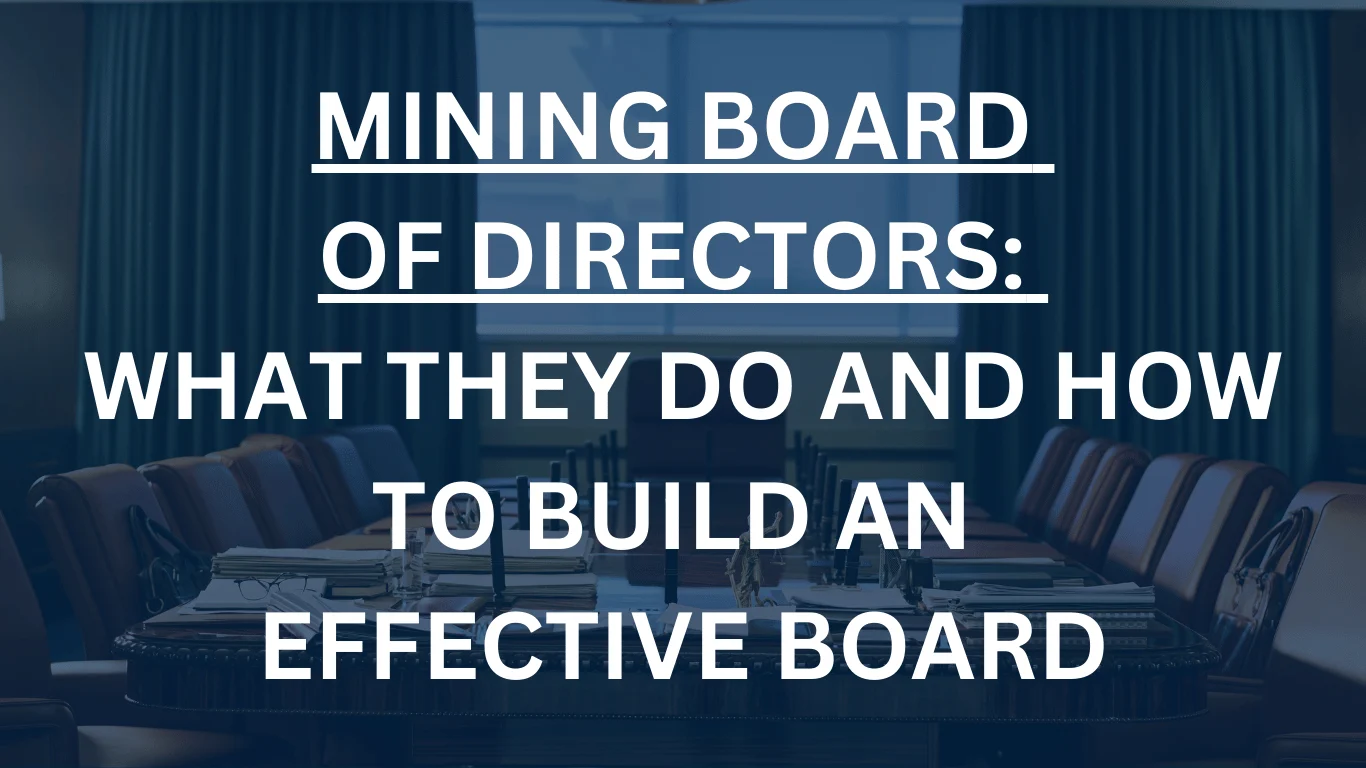
A mining board of directors is responsible for guiding the company strategically, overseeing management, and protecting the interests of shareholders. This includes approving major capital projects, monitoring risk, and ensuring legal and regulatory compliance. While day-to-day operational decisions rest with executives, boards operate with a long-term perspective, challenging assumptions, asking difficult questions, and helping management navigate complex business, environmental, and social challenges.
The role of the board has evolved significantly in recent years. Beyond traditional fiduciary responsibilities, boards are expected to consider ESG, diversity, and social licence to operate; factors that directly influence company performance and reputation. For senior executives, understanding these dynamics is essential for aligning business strategy with stakeholder expectations and securing sustainable growth.
This blog explores what mining boards of directors do, the skills and attributes that make boards effective, best practices in recruitment, and evolving expectations for governance in the modern mining industry. It is designed to provide actionable insights for CEOs, founders, investors, and senior professionals seeking to understand, engage with, or join a board in today’s mining environment.
The Role of a Mining Board of Directors
A mining board of directors serves as the governing body of a company, responsible for setting strategic direction, overseeing management, and protecting shareholder interests. While day-to-day operations are led by executives, the board ensures that long-term goals are being pursued responsibly, ethically, and profitably. Public companies rely on their boards to approve major decisions such as mergers and acquisitions, dividends, and senior leadership appointments. Private companies, including junior operators, similarly benefit from board oversight to align strategy and secure investor confidence.
The primary function of a board is fiduciary: safeguarding shareholder value, ensuring regulatory compliance, and maintaining ethical standards. Boards challenge management on strategy, assess risks, and provide guidance to navigate complex operational, financial, and social landscapes. In mining, this includes evaluating capital projects, managing permitting challenges, and maintaining the social license to operate.
Key Skills and Attributes of Board Members
An effective mining board of directors balances expertise across multiple areas. While technical knowledge, such as geology or engineering, is valuable, boards also benefit from members with operational, financial, legal, governance, and ESG expertise. Increasingly, boards seek directors familiar with technology and automation to improve efficiency, enhance safety, and reduce operational risk.
Beyond technical skills, personal attributes are crucial. Board members must listen actively, collaborate with colleagues, and be willing to ask challenging questions. Independence is key, directors should provide unbiased perspectives and avoid conflicts of interest to ensure robust decision-making. A diversity of thought and experience strengthens the board, enabling more innovative solutions and better risk management.
Best Practices in Board Recruitment
Recruiting for a mining board of directors should be structured and intentional. Companies typically begin by identifying gaps in skills, expertise, and perspective around the board table. Using search firms helps access a broad pool of qualified candidates, avoiding reliance solely on existing networks.
A well-constructed board considers skill balance, diversity, and independence. Effective boards include members with experience in finance, operations, ESG, and regulatory compliance, while also considering personal attributes such as integrity, strategic thinking, and the ability to collaborate. Chairs play a pivotal role in guiding discussions, maintaining respectful debate, and achieving consensus in decision-making.
Mitigating Risk Through Good Governance
One of the most critical functions of a mining board of directors is risk mitigation. Boards oversee management’s performance, verify information, and ask the right questions to prevent errors, mismanagement, or misconduct. Directors bear personal liability if fiduciary duties are neglected, highlighting the importance of exercising due diligence and ensuring proper insurance coverage.
Boards that function effectively create transparency, accountability, and trust with shareholders, employees, and communities. They also provide a framework for navigating ESG obligations, regulatory challenges, and reputational risks; protecting both short- and long-term company performance.
The Evolving Expectations of Mining Boards
Modern mining boards of directors are facing an evolving set of expectations beyond traditional fiduciary and strategic oversight. Investors, regulators, and communities increasingly demand that boards consider environmental, social, and governance (ESG) factors in decision-making. Effective boards monitor sustainability metrics, environmental compliance, and community engagement to manage both risks and opportunities.
Diversity and inclusion are now critical components of board performance. Companies that embrace a range of perspectives, including gender, cultural, and functional diversity; demonstrate higher innovation, improved decision-making, and stronger operational outcomes. Boards that proactively build these capabilities not only satisfy regulatory expectations but also enhance their access to the best talent and maintain credibility with stakeholders.
Social licence to operate remains a central concern for mining companies, particularly for producers, operators, and juniors entering new jurisdictions. Boards play a key role in overseeing strategies that foster trust with local communities, governments, and civil society. By ensuring management implements robust stakeholder engagement practices, boards reduce operational risks and create the foundation for sustainable growth.
In short, today’s mining board of directors must combine traditional governance and fiduciary responsibility with strategic oversight in ESG, diversity, and stakeholder engagement to remain effective and forward-looking.
Advice for Executives Aspiring to Join Boards
For senior executives seeking their first board role, visibility and networking are essential. Expressing interest in board service, building a strong professional reputation, and leveraging relationships within your industry increases the likelihood of appointment. Continuous skill development, understanding governance obligations, and being ready to contribute strategically are key to a successful transition from executive to board member.
Conclusion
Building a high-performing mining board of directors requires more than assembling experienced professionals; it demands a deliberate approach to governance, skills balance, diversity, and strategic oversight. Effective boards combine independent thinking, robust challenge, and collaboration to guide companies through complex operational and market landscapes. They protect shareholder value while creating a foundation for long-term growth, innovation, and sustainability.
For senior professionals considering board roles, preparation is key. Success begins with understanding the responsibilities of board service, developing the right skill set, and cultivating a network to support board ambitions. Knowing the value you bring; whether operational, financial, governance, ESG, or stakeholder expertise, is essential.
For companies looking to strengthen their boards, identifying the right mix of skills, backgrounds, and perspectives is critical. Structured recruitment processes, often supported by specialist search firms, help ensure boards challenge management, manage risk, and drive strategy effectively.
At Mining International, we support mining companies in building and enhancing their boards of directors. Our tailored approach combines deep industry knowledge, global networks, and executive search expertise to help companies attract the right board members for their unique needs.
If your mining company wants to strengthen its board, or you are a senior executive exploring your first board opportunity, get in touch today. We provide consultations and advice on board recruitment, succession planning, and best practices, ensuring your board delivers the leadership and oversight your business needs for long-term success.